Most people don’t start searching for eavestrough installation in Hamilton unless something has already caught their attention.
Sometimes the problem is easy to spot during a storm. Sometimes it shows up more gradually, with wet soil near the house, marks on the siding, or parts of the eavestrough starting to shift out of place. And sometimes the setup simply is not performing the way it should, even if it still looks fine from the yard.
That is usually how these issues begin. Not with one major failure, but with smaller signs that keep showing up until it becomes clear something is off.
For many Hamilton homeowners, the real concern is not just the eavestrough itself. It’s where the water ends up when the system stops doing its job properly. Once runoff starts collecting too close to the house, the risk of bigger problems starts to grow.
This guide covers what Hamilton homeowners should watch for, what tends to cause problems, and when replacing the system makes more sense than trying to patch it again.
Why Eavestrough Installation in Hamilton Matters
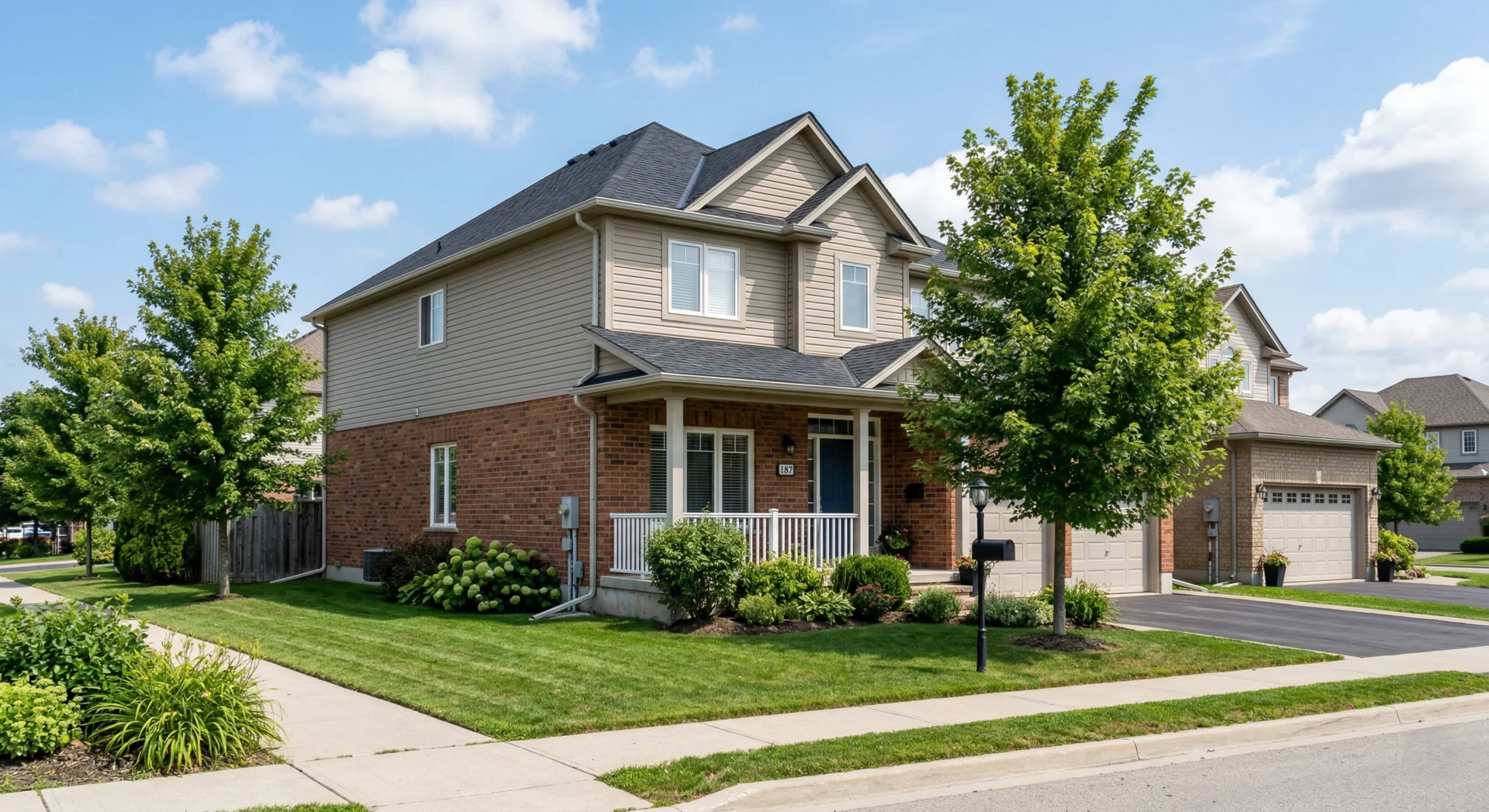
Hamilton has all kinds of homes, and that is part of the reason this topic matters. Some neighbourhoods are filled with older houses where original exterior systems are reaching the end of their lifespan. Other areas have newer builds where proper drainage still depends on having the right slope, enough capacity, and a layout that suits the roofline.
Rain has to go somewhere. When the eavestrough system is working properly, it moves that water off the roof and away from the house. When it is not, you start seeing the effects in places you do not want to see them. Water can sit too close to the foundation, run back toward entry points, spill onto walkways, or slowly wash out the ground around the home.
That is not just a contractor talking point either. The Government of Canada recommends properly functioning eavestroughs and downspouts to help move water away from the house and reduce the risk of moisture problems around the foundation.
If you want to read more, the Government of Canada page on eavestroughs and downspouts is a useful resource.
Downspouts in the City of Hamilton
There is also a local angle here. In Hamilton, downspout disconnection has been encouraged in many situations to help reduce pressure on storm systems and lower the risk of basement flooding. But when that is done, the water still needs to be directed somewhere safe. Otherwise, you trade one drainage problem for another. The City of Hamilton has more information on downspout disconnections.
That is why eavestrough installation in Hamilton is not simply about swapping out old material along the edge of the roof. It is about making sure the full drainage setup makes sense for the property and actually protects the home the way it is supposed to.
Eavestrough Installation in Hamilton Should Be Planned Around the Home
One of the biggest mistakes homeowners make is assuming every eavestrough system is basically the same.
It is not.
A proper eavestrough replacement should be planned around the house itself, not just the roof edge. A few things make a real difference:
Roof size and water volume
A larger roof sheds more water, especially during heavy rain. If the eavestrough system is too small, overflow becomes much more likely.
Downspout placement
You can have a decent eavestrough and still end up with drainage problems if the downspouts are not where they need to be. The same goes for homes that simply do not have enough of them.
Slope and water flow
The system needs the right pitch so water moves toward the downspouts properly instead of sitting in sections.
Foundation and grading
If the ground around the home does not carry water away well, the eavestrough setup becomes even more important.
Fascia condition
If the fascia behind the existing system is damaged, it should be checked before new installation goes in. There is not much value in attaching new material to a weak base.
A lot of homeowners in Ontario end up choosing aluminum, and for good reason. It holds up well, it doesn’t ask for much maintenance, and it fits most homes without looking out of place.
Common Signs It May Be Time to Replace Your Eavestroughs
A lot of people try to get one more season out of an older system. That makes sense. If one corner leaks or one section looks a little loose, it is easy to think a quick fix will be enough.
Sometimes that works. Sometimes it becomes clear pretty quickly that it did not.
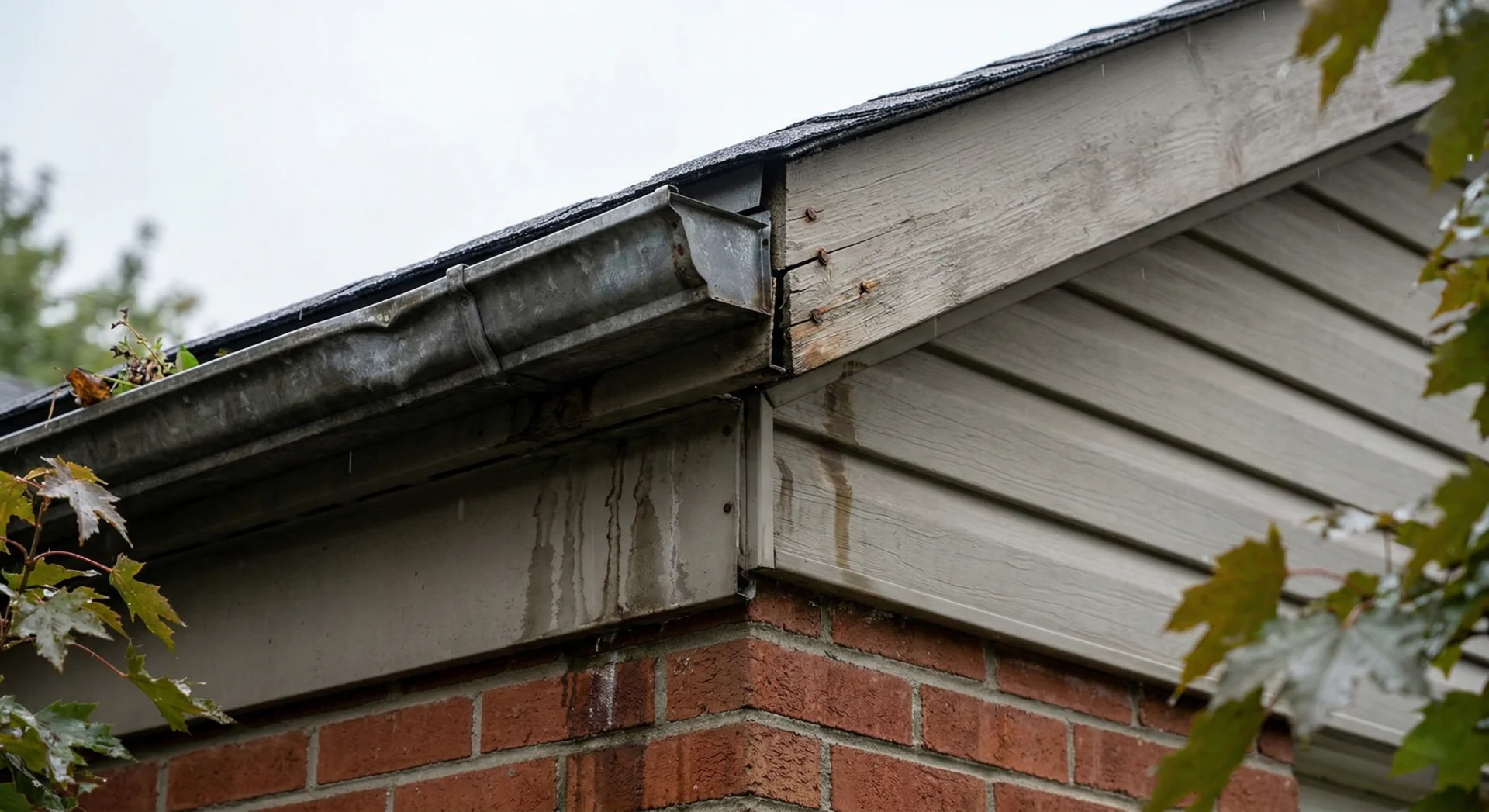
Usually, it is not one big dramatic problem. It is a handful of smaller ones that keep returning. Water comes over the edge during a hard rain. A section starts to dip. You notice marks on the siding. The ground near the house stays wet longer than it used to. None of that feels major at first, but over time it starts to paint a clearer picture.
That is often how homeowners realize the system is wearing out.
Older eavestroughs also tend to start letting go in the same places. Seams. Corners. Fastening points. That is where leaks and sagging usually begin. Once those problems keep coming back, patching them can turn into a routine instead of a solution.
There is also the possibility that the setup was never ideal to begin with. Some older systems were too small, poorly laid out, or just not the right fit for the roofline and drainage needs of the home.
If you are weighing that decision right now, this related post may help: Eavestrough Repair vs Replacement: How to Know Which You Need.
Why Aluminum Eavestroughs Make Sense for Hamilton Homes
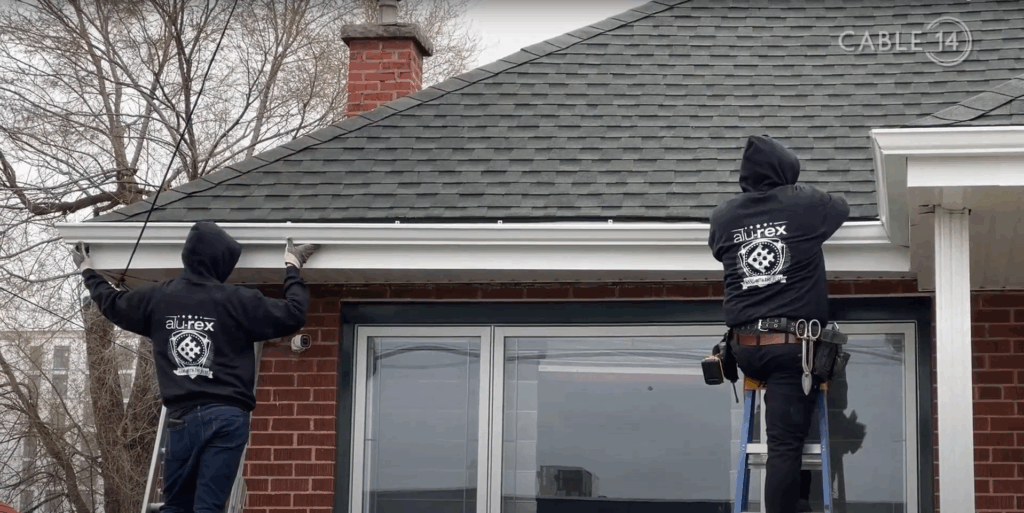

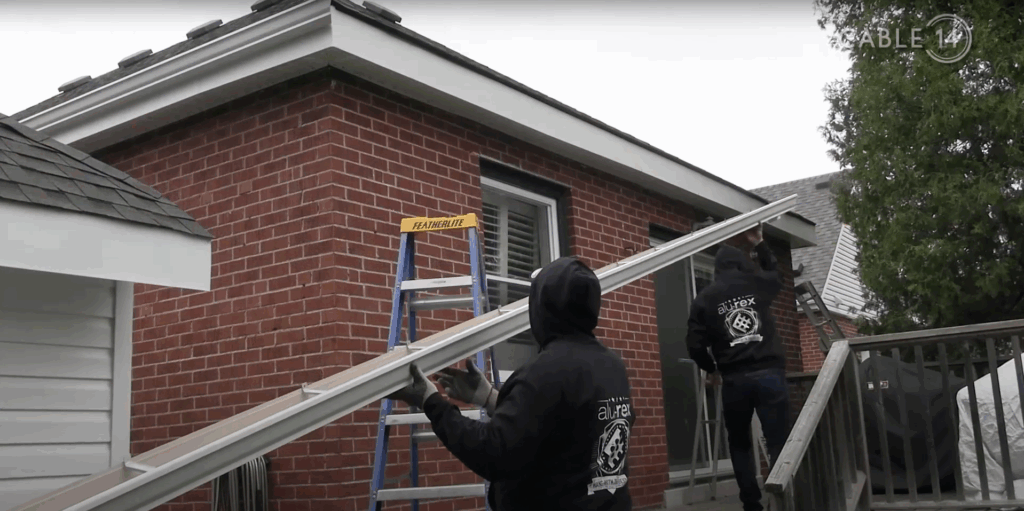
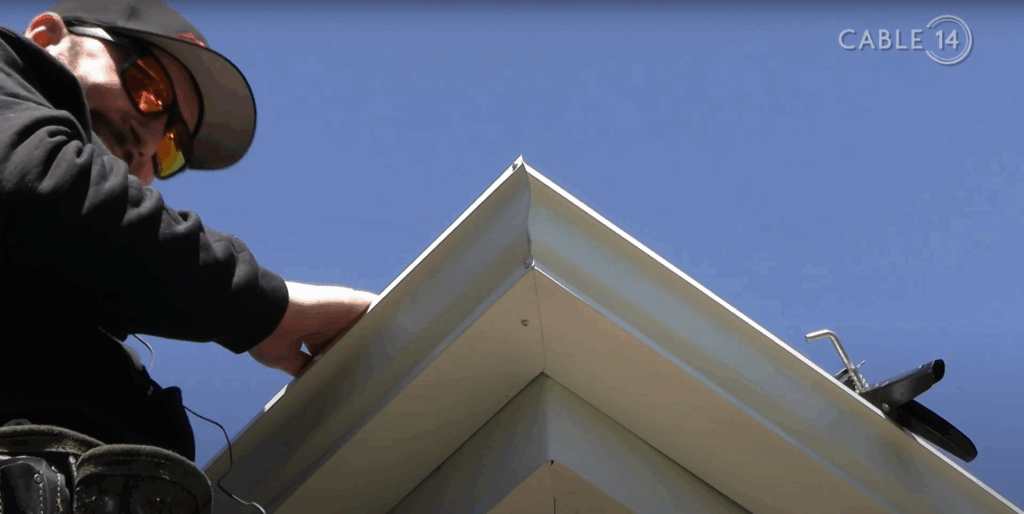
When homeowners compare materials for eavestrough installation in Hamilton, aluminum is usually the option that makes the most sense for a residential property.
Part of that comes down to practicality. It looks clean, it holds up well, and it doesn’t come with the kind of upkeep most homeowners want to avoid.
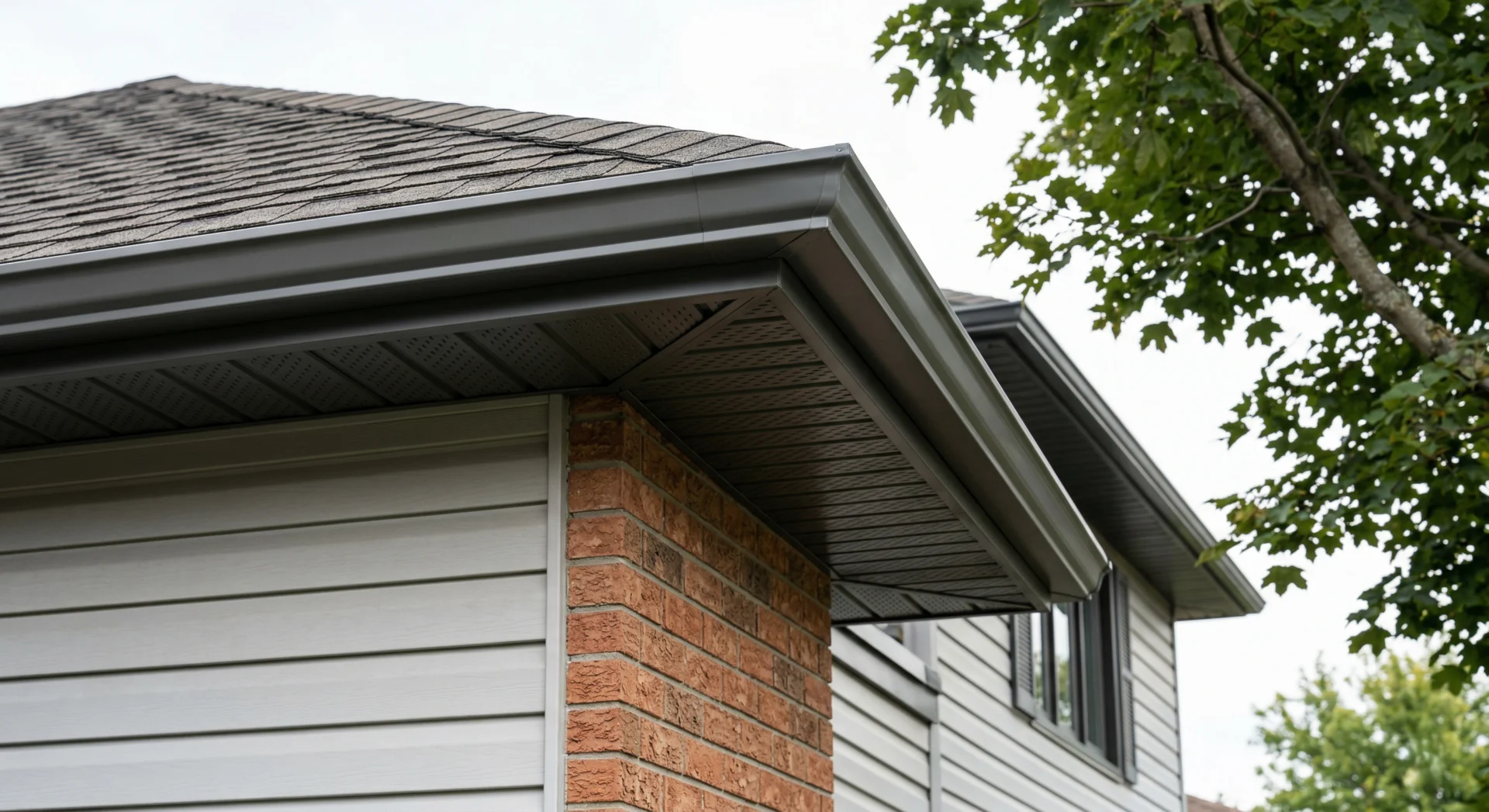
For most homes, aluminum eavestroughs are a solid choice because they:
- resist rust
- work well with a range of home styles
- come in colours that match exterior trim and siding
- handle Ontario weather well
- pair nicely with fascia and soffit upgrades when those are being done at the same time
Material quality matters too. Homeowners may not ask about sourcing right away, but they usually care once they understand how much of a difference it can make over the life of the system.
(FYI: Canadian aluminum should be the #1 choice – it’s high quality and you’re supporting Canadian businesses)
When Eavestrough Guards Make Sense in Hamilton

Some homes benefit from gutter guards more than others.
If the property has a lot of nearby trees, or the roofline tends to collect leaves and debris, protection is worth thinking about. It can help the system stay clearer and make it less of a nuisance through the year. The main thing is choosing a product that actually works well over time.
Most homeowners already understand the problem. They have either cleaned out clogged eavestroughs themselves or dealt with water coming over the sides when the system backs up. Once that happens a few times, protection starts to feel a lot less optional.
If you want to dig into that topic further, this post is a good companion read: Are Gutter Guards Worth It? Here’s the Truth.
What Hamilton Homeowners Should Ask Before Hiring an Eavestrough Company
When comparing quotes for eavestrough installation in Hamilton, price matters. But it should not be the only thing guiding the decision.
A few better questions to ask are:
What material is being installed?
Not every contractor uses the same quality of material, and that can affect both appearance and lifespan. The Eavestrough Company sources all our aluminum from Canadian companies based in Ontario and Quebec like Gentek, Royal Building Solutions, and Kaycan.
How will water be directed away from the home?
The eavestrough itself is only part of the picture. The full drainage plan matters.
Are the downspouts placed properly?
Downspouts should move water away from the house without creating a new issue near the foundation, driveway, or walkway.
Is the fascia being checked first?
If there is hidden damage behind the existing system, that should be addressed before new installation.
Is protection being recommended where it makes sense?
Some homes benefit from eavestrough guards more than others, especially where debris buildup is an ongoing issue.
What warranty is included?
Homeowners should understand both manufacturer coverage and workmanship coverage before moving ahead. The Eavestrough Company has a 5-year Workmanship Warranty and a 25-Year Aluminum Warranty with all installations.
Eavestrough Installation in Hamilton Often Goes Along With Fascia and Soffit Upgrades

One thing many homeowners find out during the quoting process is that roof edge systems work together.
When one part of that area has been dealing with moisture for a while, the surrounding parts are worth a closer look too. That is often why fascia and soffit come up during an eavestrough quote, especially on older homes.
That does not mean every project turns into a full exterior upgrade. But when the timing lines up, replacing eavestroughs along with fascia and soffit can improve performance, clean up the roofline, and help protect the home more effectively.
If you are exploring your options locally, you can also learn more on our Hamilton service area page and our main Eavestrough page.
Final Thoughts on Eavestrough Installation in Hamilton
A proper eavestrough installation in Hamilton is not just about putting new material on the house and moving on.
What matters is whether the setup makes sense for the home and deals with water the way it should. If it is not doing that, the problems usually start showing up somewhere else.
Some homeowners are dealing with obvious wear and tear. Others are noticing smaller issues that keep repeating whenever the weather turns.
Either way, it is better to deal with it before it turns into a bigger repair somewhere else.
The right eavestrough system should do its job quietly. When it is installed properly, most homeowners stop thinking about it, and that is exactly the point.